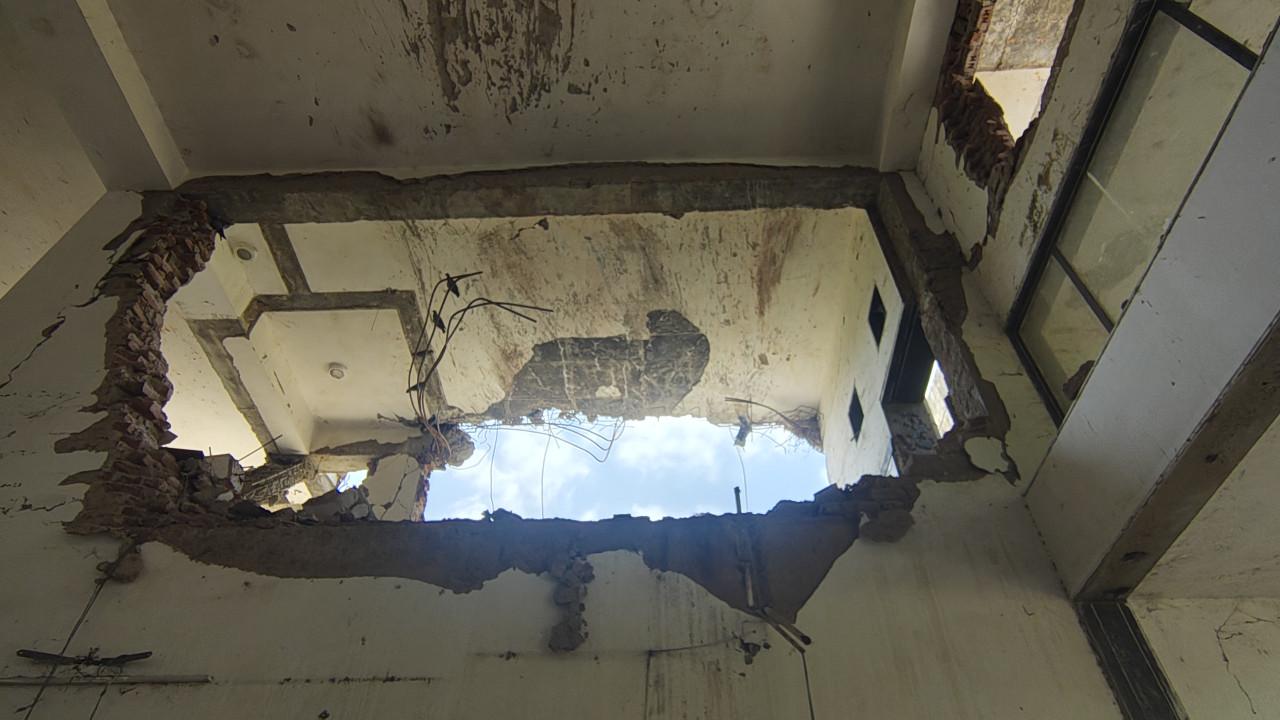

On the first anniversary of the Air India plane crash in Ahmedabad, officials from the city’s Civil Hospital and police have detailed the emergency response, forensic operations, and multi-agency coordination that followed one of India’s deadliest aviation disasters.
The Air India Flight AI-171 crash occurred on June 12 last year shortly after take-off from Sardar Vallabhbhai Patel International Airport. The London-bound Boeing 787-8 Dreamliner crashed in the Meghaninagar area and struck the B.J. Medical College hostel and mess complex, triggering an intense fire and widespread destruction.
According to officials, 242 passengers and crew were on board, with only one survivor from the aircraft, while fatalities on the ground took the overall death toll to around 260. Officials also reported that the identification process ultimately accounted for all victims through DNA and visual methods.
Ahmedabad Civil Hospital Medical Superintendent Dr Rakesh Joshi, speaking to IANS, said he was in the operation theatre performing a long seven-hour surgery when the incident unfolded. He said he received a call from the Chief Security Officer around 1:40 p.m. to 1:45 p.m. reporting heavy smoke in the campus quarters area.
He instructed immediate verification, but within seconds received confirmation that a plane had crashed. He recalled saying, “I handed over my surgery to Professor Jayshree and immediately changed and left,” after being informed that it was an international flight which had crashed directly over the medical college mess area.
Dr Joshi said he immediately alerted hospital teams through a group message, instructing those not engaged in critical patient care to report to the trauma centre as a mass casualty situation was developing.
Within minutes, multidisciplinary trauma teams were activated, including surgeons, anaesthetists, emergency medicine specialists, neurosurgeons and physicians, forming triage units to assess incoming patients.
"The first patient I encountered was a gardener with burn injuries who reported that the aircraft had fallen on the hostel mess. For the first 40-50 minutes, injured patients continued to arrive, including at least one individual who claimed to have been a passenger on the aircraft, confirming the scale of the incident," he told IANS.
Emergency protocols were immediately activated, with operation theatres prepared, blood banks informed, and mass casualty wards opened.
However, Dr Joshi said that after roughly one hour, the inflow of injured survivors stopped entirely. Instead, severely burnt, unrecognisable bodies began arriving at the hospital. He said identification through conventional means became impossible, leaving DNA sampling as the only viable method.
"Under the supervision of forensic department head Dr Dharmendra Patel, and with additional government-deputed doctors, continuous post-mortem examinations were carried out. DNA samples were collected, labelled and sent to the Forensic Science Laboratory with case-specific identification numbers linked to the crash," he said.
Relatives of victims were accommodated at B.J. Medical College and Kasauti Bhavan, where structured counselling arrangements were set up. He said, "Under Dr Meeta Khandelwal, DNA samples were also collected from relatives to enable matching with victim remains. This system allowed parallel processing of forensic identification and family support."
He stated that the first DNA match was received within 48 hours of the crash. Once matches were confirmed, hospital teams contacted families directly, completed documentation, and arranged controlled access for identification and handover procedures.
Inside Ahmedabad plane crash response: 72 hours of chaos, weeks of DNA identification work..